

By Sunil Negi
New Delhi |31|07|2026
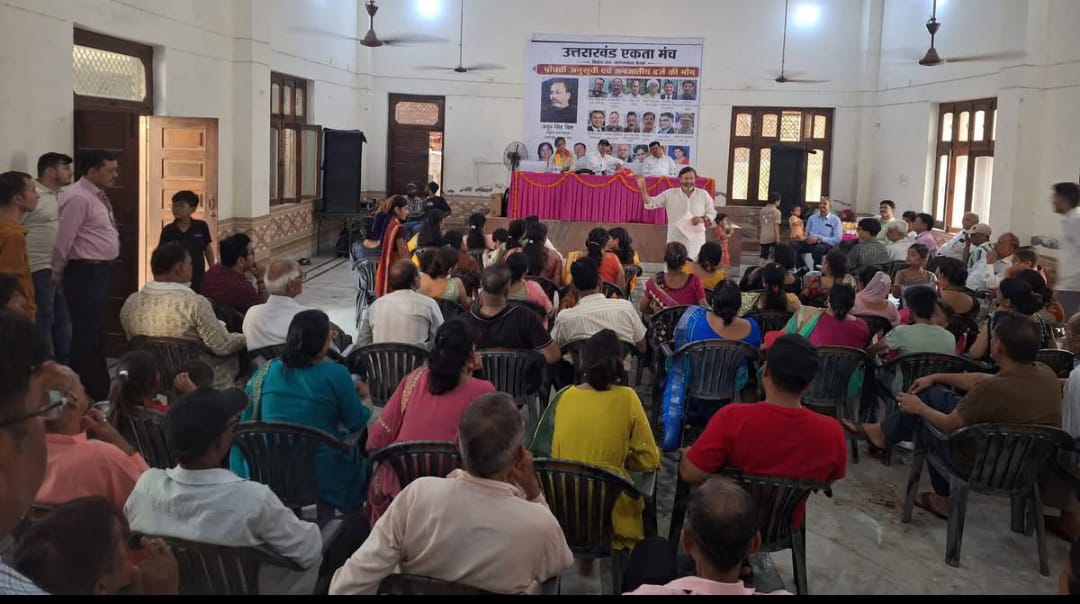
In Hapur district of Uttar Pradesh, the “Uttarakhand Sahayata Samiti” organized a meeting demanding the implementation of the “Fifth Schedule and Tribe Status” for Uttarakhand.
The gathering saw participation from members of the Kumaoni and Garhwali communities who have settled in the plains but continue to maintain strong cultural and ancestral ties to the hills. Addressing the meeting, speakers said that for decades the people of Uttarakhand have been facing migration, unemployment, and the gradual loss of control over their natural resources. To reverse this, the community is now becoming aware and united to reclaim its rights over jal, jungle and jameen — water, forest and land — in their own mountains.
They argued that granting Fifth Schedule status and Scheduled Tribe recognition to Uttarakhand would provide constitutional safeguards similar to those given to tribal-dominated areas in other states. This would help protect land from being alienated, ensure local communities have the first right over forests and water resources, and allow for self-governance through gram sabhas and traditional institutions. Supporters believe such provisions are essential if people are to find sustainable livelihoods in their villages instead of being forced to migrate to cities like Delhi, Hapur, and other industrial centers.
Leaders at the meeting said the demand is not against development, but is aimed at a development model that keeps the interests of mountain communities at the center. They stressed that with legal protection over land and forest, the youth could take up agriculture, herbal products, tourism and small enterprises in the hills themselves rather than leaving home in search of jobs.
The Uttarakhand Sahayata Samiti announced that it will take this demand to more districts and will build wider support so that the matter is raised with both the state and central governments. The participants resolved to run an awareness campaign in Kumaon and Garhwal as well as among Uttarakhandi communities living outside the state, stating that without rights over their natural resources, the dream of a self-reliant Uttarakhand cannot be realized.